MyMenu1

Showing posts with label royal icing. Show all posts

Friday, August 22, 2014

The 48 Hour Color Experiment

Organization or Procrastination . . . which category do you fit into?  Those who know me know I hate to procrastinate, for it gives me MAJOR anxiety and usually leads to bad juju.  I like to be prepared for anything that comes my way . . . the good, the bad and the ugly.  If you are a born procrastinator, you know that being organized is easier said than done.
However, change is good and being organized has its benefits for sure.  
You will see . . . for I will prove it to you!

When I have a cookie order to get out, I always start the week beforehand.  
Why???  Well, I just downright despise nasty surprises and when I procrastinate . . . it never fails.  I have woken up to darker colors, millions of air bubbles, craters the size of the moon and cracks that take up the whole darn cookie.  Some things can't be prevented and still remain a mystery to us all.  The one thing that you can prevent from happening, is having your colors change on you.  Food colors need time to settle to their right shade, so taking the time to prepare them in advance will keep you from those nasty surprises and the bonus is . . . less food coloring in your icing.
Colors that contain primary colors seem to darken fairly quickly, but colors like black and brown take some extra time to deepen.  I mentioned on my very first post how patience is key during mixing icing . . . and that is oh so true!!!

I woke up the other day and had this bright idea to do a color experiment to show the progression of color changes over a 48 hour period.  For the experiment, I used two tablespoons of royal icing and two drops of food coloring.  I let the colors sit in airtight containers to darken and then photographed them at timed intervals for a full 48 hours.  Please note:  I would've done 12 hour and 18 hour intervals, but I was in a deep sleep dreaming about colorful rainbows and gummy bears:-)

The start of the experiment was done Tuesday August 19, 2014 at 10:45 am.


This was taken 8 hours later on Tuesday August 19, 2014 at 6:45 pm.


This was taken 24 hours later on Wednesday August 20, 2014 at 10:45 am.


This was taken 48 hours later on Thursday August 21, 2014 at 10:45 am.


Super Red


Orange


Lemon Yellow


Leaf Green


 Royal Blue


Regal Purple


Deep Pink


Chocolate Brown


Super Black


Conclusion:  The start color is the lightest shade and by the 8th hour it progresses to a darker shade.  The color maintains the same shade at the 24th hour as it was at the 8th hour, but darkens significantly by the 48th hour.  

What does this all mean???  Well . . .  it means that you can get the colors you want simply by mixing your colors early, without having to add more food color.  It also means, no pouting when your colors don't come out the way you planned because you planned ahead.  WIN/WIN!!!   


Have a wonderful and colorful week:-)


Friday, April 25, 2014

Mixing Tertiary Colors The Easy Way

Phew...I survived the holidays!!!  I can finally get back to doing what I love...mixing up colors.

Last time, we learned about color bias and how to choose the proper "primary" colors to mix all other colors.  Color bias is mainly used for "primary" colors, since pure primary colors don't exist.  However, putting secondary colors (orange, green and violet) into color bias groups can make it easier for you to see the difference between each secondary color. Can you see the dominant "primary" color in each set of secondary colors on the chart?


Secondary colors can lean toward a color bias...this is what is known as a tertiary color.  We already know that we need to mix a "primary" color and a secondary color to get a tertiary color.  But wait...which two colors do we need to mix together?  It really doesn't matter!!!  What I love about creating tertiary colors is that there is no wrong way to mix them...which means no muddy colors.  


Don't forget...you still need to remember your complementary colors, for you don't want to mix those two together unless you plan on making a neutral color (refer to complementary chart).   


Red-Orange (Red + Orange)

Let's say you needed to make a specific tertiary color such as Vermillion.


You need to choose a "primary" red that has an orange bias (refer to "Primary" Color Bias Chart).  When it comes to choosing the right orange, you need not to worry.  Orange already contains red, so any orange will do.  I will let you in on a little secret...it will make life so much easier if you choose the orange that leans towards the red bias.  You won't have to add as much "primary" red to your icing.  We all know red has an aftertaste and can be harmful to our bodies...so it just makes sense to use less of it when possible.  

Take a look at the icing samples below, which two look the closest to Vermillion?  


"Primary" Super Red mixed with oranges
(1) Terracotta  (2) Electric Orange  (3) Orange
(4) Copper  (5) Peach
"Primary" Red Red mixed with oranges
(6) Terracotta  (7) Electric Orange  (8) Orange
(9) Copper  (10) Peach
"Primary" Tulip Red mixed with oranges
(11) Terracotta  (12) Electric Orange  (13) Orange
(14) Copper  (15) Peach
"Primary" Xmas Red mixed with oranges
(16) Terracotta  (17) Electric Orange  (18) Orange
(19) Copper  (20) Peach
"Primary" Holiday Red mixed with oranges
(21) Terracotta  (22) Electric Orange  (23) Orange
(24) Copper  (25) Peach

That is right...#1 and 6 match the Vermillion swatch!  These icing colors are the most accurate because I used an orange biased "primary" red and Terracotta for my secondary color, which is a red biased orange (See Secondary Color Bias Chart above).  If you don't own a food color such as Terracotta you can use any orange and just add more red to your icing.  

Quiz time!!!  Now that you know what two colors will get you the most accurate tertiary color, let's see if you can find all of them for each color below.  The two best answers are listed after each set of icing colors.  Remember what you learned and have fun!!!


Yellow-Orange (Yellow + Orange)

Which two numbers match this Gold?   


"Primary" Lemon Yellow mixed with oranges
(1) Terracotta  (2) Electric Orange  (3) Orange
(4) Copper  (5) Peach
"Primary" Electric Yellow mixed with oranges
(6) Terracotta  (7) Electric Orange  (8) Orange
(9) Copper  (10) Peach
"Primary" Egg Yellow mixed with oranges
(11) Terracotta  (12) Electric Orange  (13) Orange
(14) Copper  (15) Peach
"Primary" Gold mixed with oranges
(16) Terracotta  (17) Electric Orange  (18) Orange
(19) Copper  (20) Peach
Answer: #2 and #8 match the Gold swatch above.     


Yellow-Green (Yellow + Green)

 Which two numbers match this Chartreuse?  


"Primary" Lemon Yellow mixed with greens
(1) Electric Green  (2) Mint Green  (3) Avocado
(4) Leaf Green  (5) Forest Green  (6) Teal
"Primary" Electric Yellow mixed with greens
(7) Electric Green  (8) Mint Green  (9) Avocado
(10) Leaf Green  (11) Forest Green  (12) Teal
"Primary" Egg Yellow mixed with greens
(13) Electric Green  (14) Mint Green  (15) Avocado
(16) Leaf Green  (17) Forest Green  (18) Teal
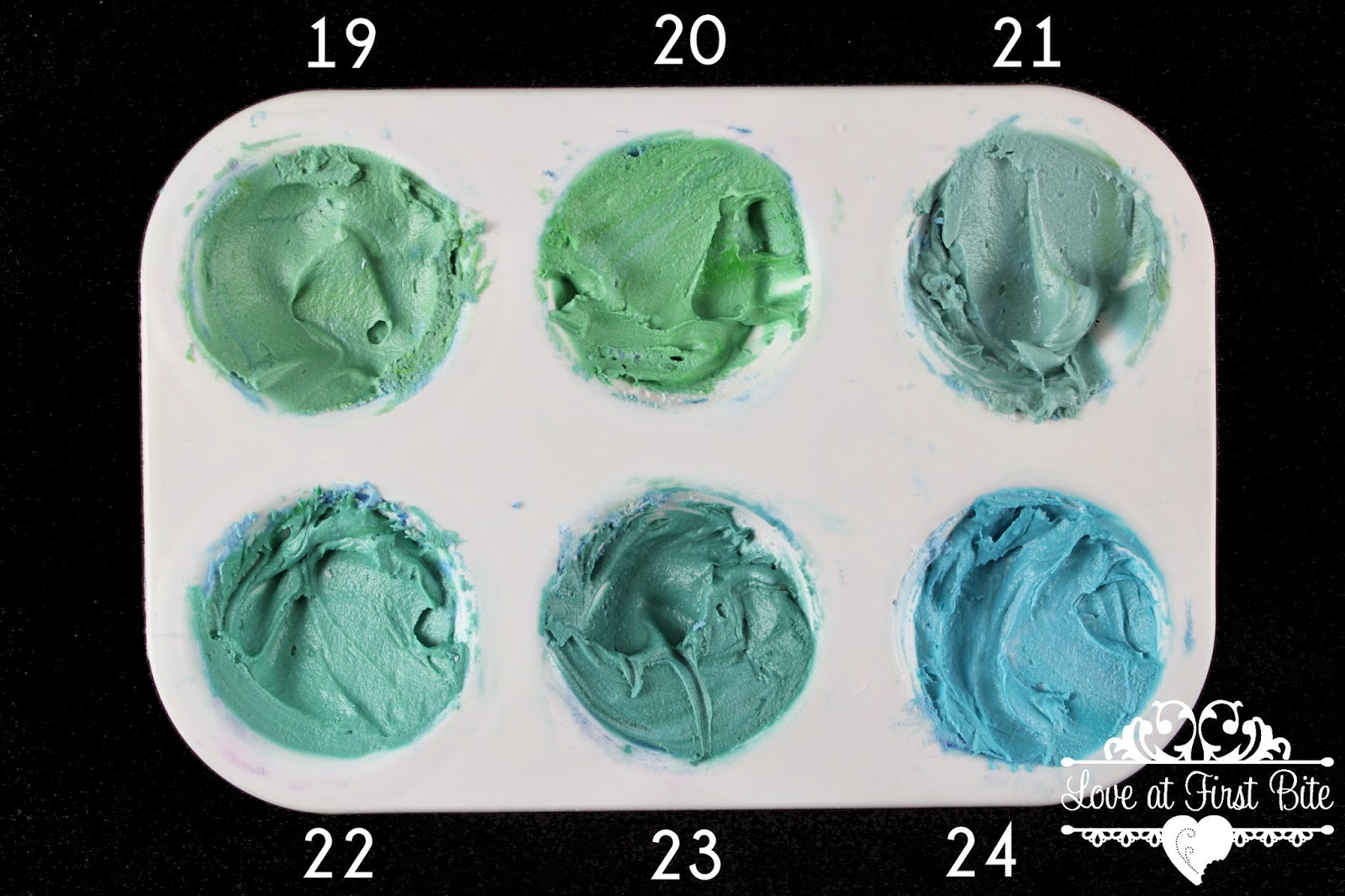
"Primary" Gold mixed with greens
(19) Electric Green  (20) Mint Green  (21) Avocado
(22) Leaf Green  (23) Forest Green  (24) Teal
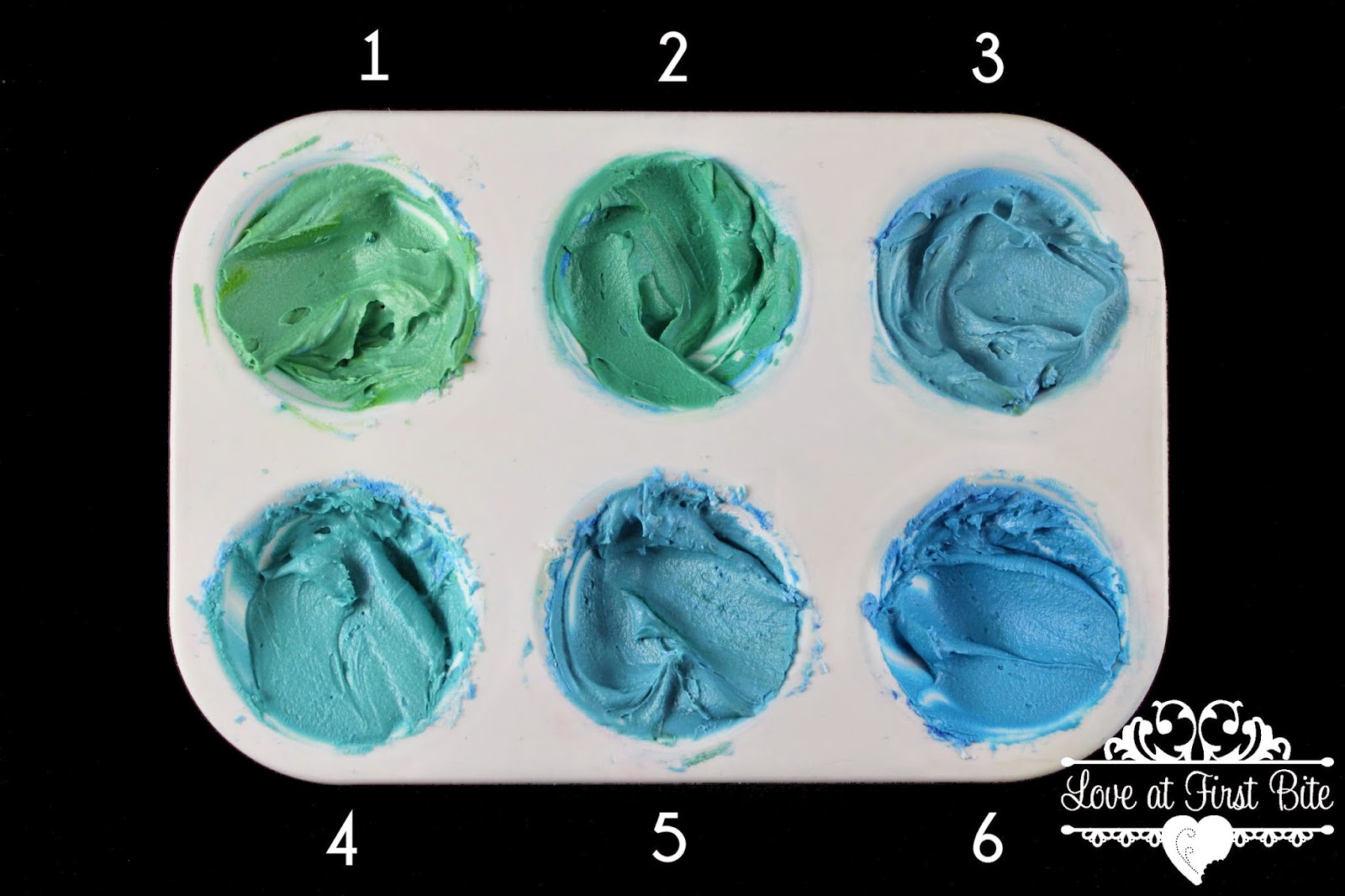
Turquoise mixed with 'primary" yellows
(25) Lemon Yellow  (26) Electric Yellow  (27) Egg Yellow
(28) Gold
Answer: #1 and #7 match the Chartreuse swatch above. 


Blue-Green (Blue + Green)

Which two numbers match this Turquoise?


"Primary" Royal Blue mixed with greens
(1) Electric Green  (2) Mint Green (3) Avocado
(4) Leaf Green  (5) Forest Green  (6) Teal
"Primary" Electric Blue mixed with greens
(7) Electric Green  (8) Mint Green  (9) Avocado
(10) Leaf Green  (11) Forest Green  (12) Teal
"Primary" Sky Blue mixed with greens
(13) Electric Green  (14) Mint Green  (15) Avocado
(16) Leaf Green  (17) Forest Green  (18) Teal
"Primary" Navy Blue mixed with greens
(19) Electric Green  (20) Mint Green  (21) Avocado
(22) Leaf Green  (23) Forest Green  (24) Teal
Turquoise mixed with "primary" blues
(25) Royal Blue  (26) Electric Blue  (27) Sky Blue
(28) Navy Blue
Answer: #8 and #10 match the Turquoise swatch above.


Blue-Violet (Blue + Violet)

Which two numbers match this Indigo?


"Primary" Royal Blue mixed with violets
(1) Violet  (2) Regal Purple  (3) Electric Purple
"Primary" Electric Blue mixed with violets
(4) Violet  (5) Regal Purple  (6) Electric Purple
"Primary" Sky Blue mixed with violets
(7) Violet  (8) Regal Purple  (9) Electric Purple
"Primary" Navy Blue mixed with violets
(10) Violet  (11) Regal Purple  (12) Electric Purple
Answer: #1 and #2 match the Indigo swatch above.


Red-Violet (Red + Violet)

Which two numbers match this Mulberry


Violet mixed with "primary" reds
(1) Super Red  (2) Red Red  (3) Tulip Red
(4) Xmas Red  (5) Holiday Red  (6) Burgundy
Regal Purple mixed with "primary" reds
(7) Super Red  (8) Red Red  (9) Tulip Red
(10) Xmas Red  (11) Holiday Red  (12) Burgundy
Electric Purple mixed with "primary" reds
(13) Super Red  (14) Red Red  (15) Tulip Red
(16) Xmas Red  (17) Holiday Red  (18) Burgundy
Answer: #4 and #11 match the Mulberry swatch above.


I hope you got all of them right!!!  Next time I will show you all the colors you can make using your pinks and neutral colors.  

Have a wonderful and colorful week:-)